
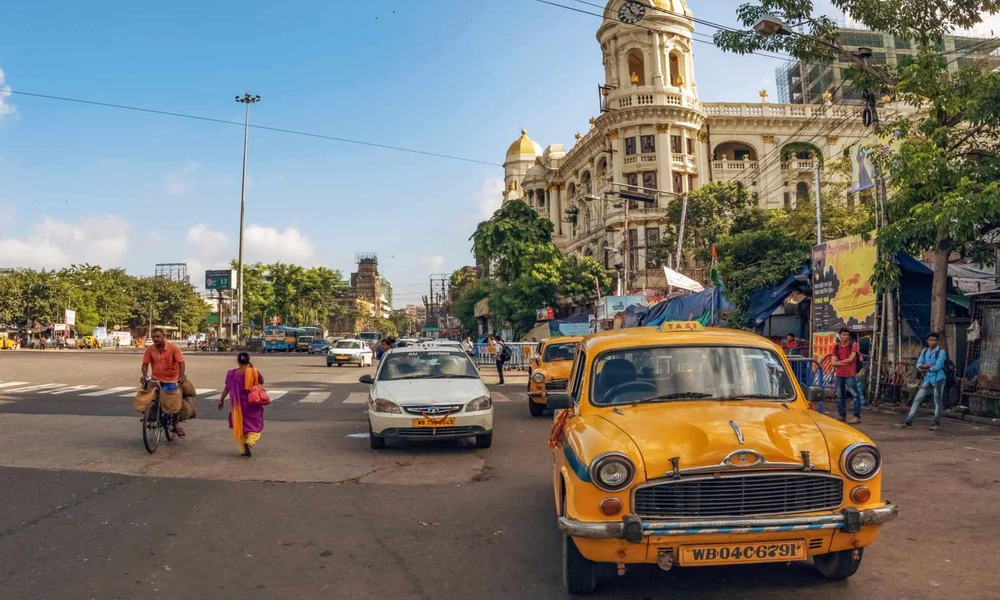
Kolkata is one of those cities where you almost always underestimate the geography before you arrive. It is larger than it looks on a map, slower to move through than you plan for, and far more varied in character across its different neighbourhoods than most travel content suggests. If you are working within 48 hours, the decisions you make about where to go and in what order will determine whether you leave with a real sense of the city or just a handful of landmarks ticked off a list.
This guide is built around a realistic two-day window. It accounts for travel time, heat, and the fact that Kolkata rewards slowing down in the right places rather than rushing between attractions.
Getting Your Bearings Before You Arrive in Kolkata
The city divides broadly into its northern and southern halves, with the Maidan acting as a central reference point. The north holds most of the older architecture, the artisan quarters, and the more traditional residential areas. The south is where you find the university neighbourhoods, quieter residential streets, and a more contemporary side of the city. The majority of my time in Kolkata was spent in the downtown area near Park Street and Chowringhee, which provides good access to both the northern and southern parts of the city.
I took the metro from the airport on arrival. It is direct, air-conditioned, and bypasses the worst of the city traffic entirely. The Kolkata metro network has expanded significantly in recent years and covers most areas a short-stay visitor would need to reach.
There are hotels in Kolkata across a wide range of budgets and locations. Staying near Park Street or Esplanade gives you central access to both the north and south without committing too hard to either. If you prefer to have a quieter place to stay while in Kolkata, the Ballygunge and Lake Market area in the southern half is worth considering prior to booking your accommodation.
Day One: North Kolkata
I started the first day in the north and made sure to leave early. By 10 am, the heat builds considerably, and the narrower lanes around Shyambazar become harder to move through comfortably.
Marble Palace in Jorasanko was my first stop, and it required a little advance planning. Entry needs a permit collected from the West Bengal Tourism office in BBD Bagh, which adds a logistical step but keeps the crowd inside manageable. The nineteenth-century mansion was built by the Mullick family and holds an unusual accumulation of European sculpture, Flemish paintings, Belgian glasswork, and decorative objects spread across its rooms. There is genuinely nothing else like it in the city.
From there, Jorasanko Thakur Bari is approximately a 10-minute walk. This is the ancestral home of Rabindranath Tagore, now managed as a museum by Rabindra Bharati University. I found the building itself more affecting than the exhibits. The upper floors and internal courtyards give a clear picture of how a prominent nineteenth-century Bengali household was structured and lived in.
College Street worked well as a mid-morning stop, reached easily by auto-rickshaw from Jorasanko. The footpath bookshops along this stretch stock an extraordinary range of academic texts, Bengali literature, and second-hand volumes.
Day Two: The Centre and South Kolkata
I spent the second morning at the Maidan, which is best visited early. This large open ground in central Kolkata is where the city comes to breathe, and weekend mornings attract cricketers, walkers, and food vendors across the grass. Victoria Memorial sits at its southern edge. At the south end of the Maidan is the Victoria Memorial. The Memorial is architecturally majestic, and the gardens that surround it are beautifully maintained. The interior of the building displays history reasonably well. However, the most significant reason to visit is the building itself.
Park Street is worth an afternoon on foot. It has shifted considerably in character over the decades, but retains a concentration of independent restaurants, old bakeries, and a general energy that makes it a useful place to understand how central Kolkata functions daily.
What to Prioritise if Time is Short?
Another site to consider visiting would be Kumartuli, the area known for pottery making, located on the banks of the Hooghly River. Artisans in the area create clay idols for the Hindu Festival of Durga Puja year-round. Visiting the area before the festival months will allow you to visit the workshops more quietly and see artisans at work.
In the early morning, the Howrah Bridge is best seen at Mullik Ghat on the riverbank. This time is when the flower market beneath the bridge is the busiest. The light on the river at this time of day also has a certain quality to it that makes visiting at this time worthwhile.

Comments are closed.