
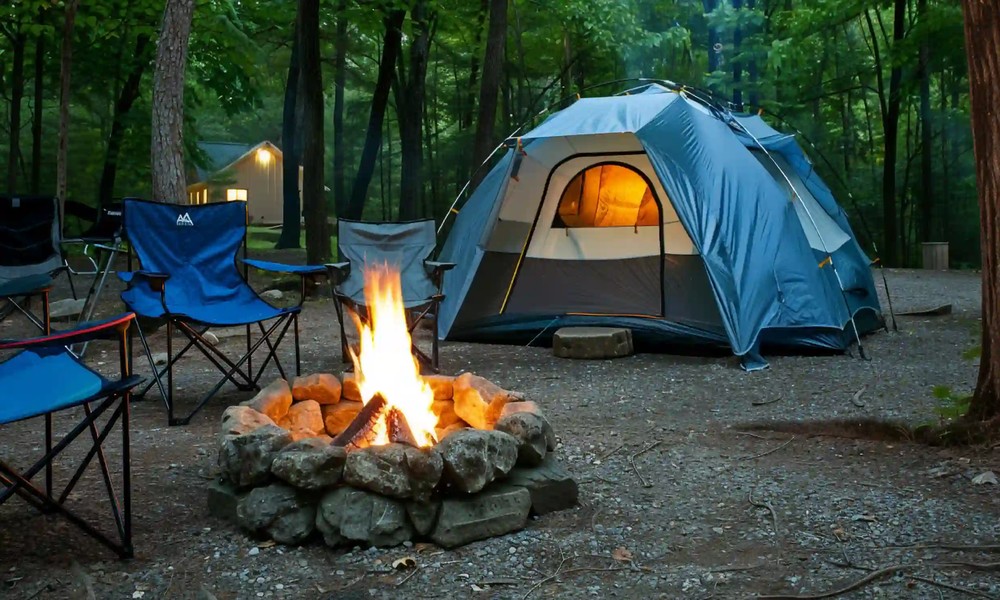
There’s a special kind of freedom in waking up close to nature, without missing out on the comforts that make travel truly relaxing. You see it at festivals where the campground feels like a boutique village, or at a lakeside retreat where canvas lodges stand neatly among the pine trees. Behind many of these experiences lies a smart solution that bridges the gap between a classic tent and a permanent structure: the semi-permanent tent.
Unlike lightweight backpacking tents, semi-permanent structures are built to stay up for weeks, months, or even an entire season. For travelers, that often means a more reliable outdoor stay: less hassle, more comfort, and a space that feels thoughtfully designed.
Travel moments where semi-permanent tents shine
This type of temporary accommodation emerges when a destination wants to combine the charm of camping with the convenience of a small lodge. Common examples include:
– Festival villages and multi-day events where guests want to sleep dry and safe and store their belongings
– Glamping resorts in forests, vineyards, and coastal dunes with a focus on comfort and minimal environmental impact
– Seasonal camps near ski resorts or national parks that operate for a few months a year
– Remote base camps for hiking, kayaking, or wildlife tours where a stable shelter makes long days outdoors easier
If you like waking up to the sound of birds but also want a real bed and a door that closes, this is the perfect compromise.
Advantages that make a difference on the road
A semi-permanent tent is built for long-term use. The materials are usually heavier-duty, the frame is designed for stability, and the design can better handle changing weather. That often means greater wind resistance, better protection against rain, and options for insulation or ventilation, depending on the climate.
Another advantage is flexibility. Hosts can use the same structure as a sleeping area, dining area, yoga space, or covered lounge. Because many models are modular, you can expand them, rearrange them, or move them when the season ends or the location changes. Specialists like permanent tent demonstrate how semi-permanent solutions are suitable for long-term use while remaining adaptable.
Practical tips for booking a stay
1. Check exactly what “comfort” means. Some tents have real beds, heating, and a private bathroom; others are essentially luxury camping.
2. Ask about temperature control. In warm areas, ventilation and shade are important; in cooler regions, insulation and extra blankets help.
3. Let op de vloer. Een verhoogde vloer is prettig bij nat weer en houdt de ruimte schoner.
4. Neem iets mee tegen licht en geluid. Canvas laat vaak vroeg licht door en de natuur heeft een eigen soundtrack. Oordoppen en een slaapmasker kunnen helpen.
5. Denk aan regendagen. Bij slecht weer is een overdekte gemeenschappelijke plek of een binnenactiviteit in de buurt extra waardevol.
Why travelers keep choosing this option
Semi-permanent tents strike the perfect balance: adventurous, but not exhausting. You get the closeness to nature that makes travel memorable, plus the stability that helps you truly recharge.
Whether you’re heading to a festival, trying glamping for the first time, or planning a trip centered around hiking and stargazing, this type of accommodation can easily turn camping into a comfortable and relaxing getaway.

Comments are closed.